





Can’t Buy Me Loyalty
By Luke LaBree 🔎
CMO, Dennis Food Service
Attention opens the door. Authenticity is what builds loyalty.
There’s a movie from the ’80s that started rattling around in my head recently. Can’t Buy Me Love. On the surface, it’s a typical high-school story from that era. A smart, awkward kid makes a deal with one of the most popular girls in school. He helps her out of a jam, she helps him gain instant social credibility. For a while, it works exactly as planned.
But that’s not really what the movie is about.
What the story reveals, slowly and a bit uncomfortably, is that attention and acceptance aren’t the same thing as connection. You can manufacture the appearance of popularity, but you can’t shortcut the rest. As the main character leans further into the performance, he drifts from the relationships that actually mattered. It’s a familiar tension for any business trying to grow, especially when paying for attention can feel like a faster path than working for trust.
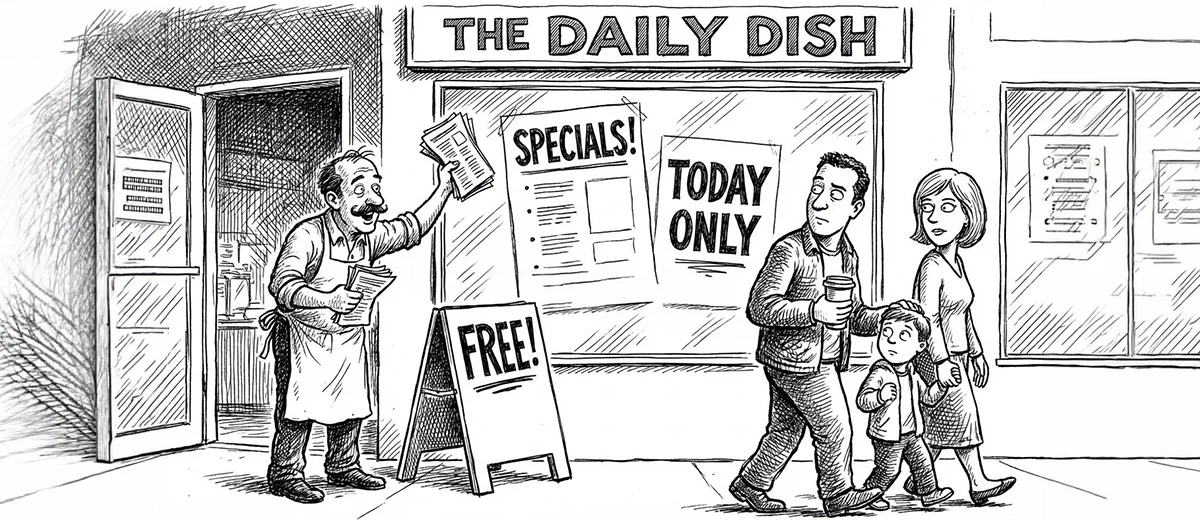
It’s never been easier to buy attention. You can pay for clicks, impressions, boosted posts, sponsored placements, limited-time urgency. Used strategically, those tools can be effective — launching something new, reaching people who haven’t found you yet, or supporting a specific moment.
Attention, by design, is temporary. It shows up, looks around, and moves on.
Loyalty behaves very differently.
The guests who come back regularly aren’t just responding to a promotion or a clever message. They’re responding to familiarity. To the quiet confidence that it’s theirs—a place they look forward to. That kind of relationship is built through repeat visits, consistency, and a sense of authenticity that can’t be manufactured on demand. When that honesty carries through into your training, marketing, and content, it creates a presence that supports genuine, organic interest.
In the movie, the turning point comes when the characters stop performing and start showing up as themselves again. The real connection appears after the initial deal fades away. That’s when they start seeing each other clearly—and when the relationship becomes real instead of transactional.
Foodservice tends to follow a similar pattern.
Menus, pricing, and execution matter deeply, but what keeps people coming back—especially in the middle of winter—is how a place fits into their lives. At a certain point, guests stop evaluating every choice. They trust the special. They take the drink recommendation. They don’t wonder if this was the right call, because experience has already answered that question for them.
February, with all its talk of romance and relationships, is a useful reminder of that. Valentine’s Day may drive a single night of attention, but loyalty is shaped by what happens before and after it—the consistency of the experience, the intrigue and reliability of the menu, and the sense that this is a place worth returning to even when there’s no occasion to celebrate.
The risk, just like in the movie, is confusing access with affection.
A larger following doesn’t automatically mean deeper loyalty. More emails in your database don’t automatically mean stronger relationships. Paid reach can create a spike in visibility, but on its own, it only takes you so far.
Loyalty you can actually keep is built the thoughtful way: showing up consistently, sounding like yourself, and giving people something real to recognize and trust. Connections built on those foundations last without needing to be constantly paid for.
The more you’re willing to share who you really are as a brand—your food, your people, your decisions, your standards—the more your customers have to connect with. That shows up in different ways: how a regular is greeted in the dining room, whether a chef steps out to talk through a special, or how you tell your story online through photos, videos, and the moments you choose to share. Those moments add up. Over time, they build familiarity, and that familiarity is what turns a good experience into a lasting relationship.
At its core, the story in Can’t Buy Me Love draws a clear line between getting in the door and what happens after. The shortcut works — attention is gained, opportunities open, a real connection even becomes possible. But it only lasts if something real follows. That’s a distinction worth keeping in mind this month. You can buy attention. You can rent excitement. But loyalty is earned through authenticity, consistency, and care.