





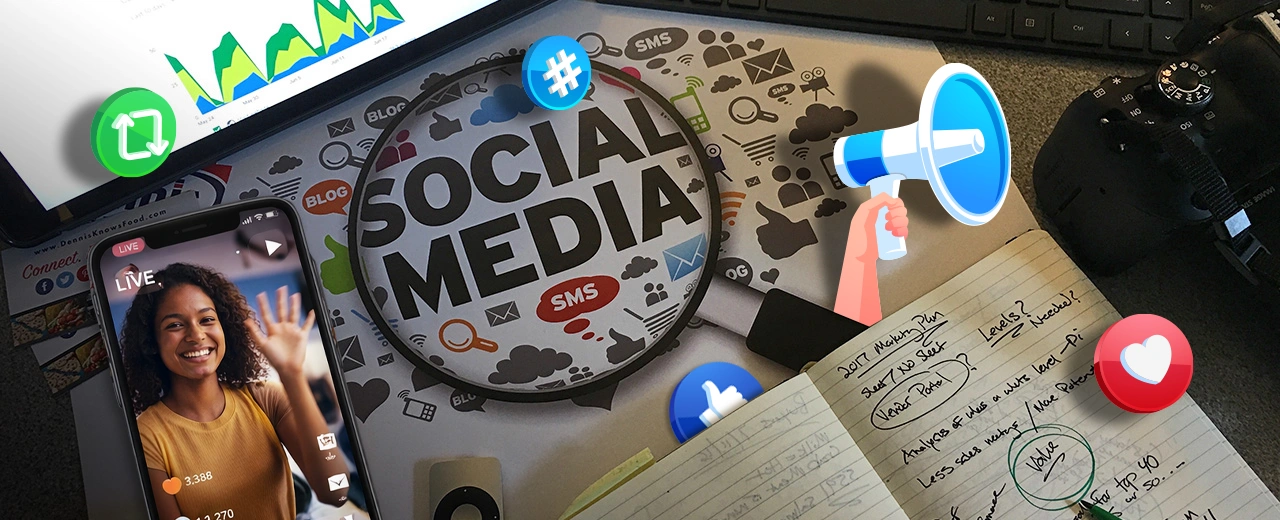
Social media opens the door to new customers while keeping your operation connected to the guests who already know you.
Sharing content online connects your business to potential customers and helps turn attention into real-world traffic. Today, that starts with Doing the Free Stuff First using organic posts, photos, and especially short-form vertical video, which platforms actively push to new audiences.
A traffic-driving digital presence can be created by any hospitality operation, from foodservice to lodging, big or small. Even with a limited (or nonexistent) marketing budget, operators can make a real impact by putting their passion on display—letting personality, humor, and real moments lead, with information supporting the story.
Resources, Articles, & More









Let’s Get Reel: Vertical Video Drives Awareness
Before you spend a dollar on ads, start with what’s already in your hands. The phone in your pocket is enough. Short-form, vertical video is where attention lives right now, and platforms like Instagram Reels, TikTok, and YouTube Shorts are built to show your content to people who don’t know you yet. That’s the shift—this isn’t just keeping up with regulars anymore, it’s about getting discovered by the next customer scrolling by.
The advantage is how simple it can be. You don’t need a production, you need something real. A wide interior shot, a knife hitting the cutting board, steam coming off a dish, a quick exchange between staff, an event coming together—these moments already exist, they just need to be seen. Keep it vertical, keep it short, and focus on the first second. There’s no single right way to do it, but the work that tends to travel is the work that shows something genuine.
Passion works. When someone actually cares about what they’re doing, it shows—and people respond to that without needing it explained. Humor works too. It’s one of the fastest ways to stop the scroll and get a reaction, even in a crowded feed. Authenticity is its own thing. People can tell when something feels forced versus when it’s just real, unpolished, and honest. And then there’s insight—showing something useful, interesting, or just a little behind the curtain. That gives people a reason to stay, not just look.
Any one of these can carry a video on its own. If you hit more than one, even better. If you somehow hit all four, you’re doing something right. If it feels real, people will give it a second—and that second is everything.

How to Boost “Likes”
 Two main reasons that people unlike a brand page are that their posts are uninteresting, and they post too frequently (for the given platform.) Keep more of the fans you already have by creating context driven posts and engaging content that “meets the expectations” of your audience.
Keep blatantly promotional content to a minimum. One school of thought recommends an 80/20 rule as a starting point. 80% contextual or engaging content and 20% hard-sell. As you begin to discover your brand’s unique voice this can approach 60/40. Watch audience engagement to course correct.
Consistency doesn’t mean constant noise; it means delivering value in rhythm with your audience’s attention. Every post is a chance to reinforce why someone followed you in the first place — relevance, insight, entertainment, or connection. When your content respects their time and expectations, you won’t have to fight to keep their attention — they’ll give it to you willingly.
Keep listening, keep testing, and keep adjusting. The algorithms may shift, but the principle won’t: audiences stay loyal to brands that make their feeds feel better, not busier.

An approximate guide to #hashtags
 Ready to show off your #foodie chops? Hashtags, or the “number sign” # have established a permanent place on most popular social networks, including Twitter, Facebook, LinkedIn, Instagram, and even Pinterest. Hashtags are the most effective means of categorizing content on social media. By grouping content with a click, hashtags increase the visibility of your content, making your business easier to discover. Hashtags allows you to connect with and engage social media users based on a common place, topic, or interest.
FACEBOOK
Use 1-2 Hashtags
Use hashtags sparingly and occasionally to associate your content with a specific event or effort. Too many and too frequent use of hashtags will start to annoy your audience.
INSTAGRAM
Exactly 5
Always use hashtags on Instagram. You’ll want to experiment with which hashtags work best and how many of them to use. Bottom line, hashtags increase the visibility of and engagement with your content. They are also a great way to run a promotion or contest.
TIKTOK
Exactly 5
TikTok’s algorithm favors relevance over volume. Instead of loading your caption with every tag you can think of, focus on about five that clearly fit your content. Combine one or two trending hashtags with a few niche or branded ones that describe what your video is actually about. TikTok captions are limited to 100 characters, so use that space wisely. The goal is discoverability through context, not clutter.
TWITTER/X
Use 1-3 Hashtags
Use hashtags strategically to “attach” your content efforts to a relevant trend, event or location. Twitter/X will offer you up some great options so you don’t always have to come up with them on your own. When using hashtags on Twitter/X – think local, trending, and relevant.
THREADS
Use 2-8 Hashtags
Threads is more conversation-driven than hashtag-driven. You can still include a few relevant hashtags, but they’re not doing the heavy lifting here. Clear, natural captions and timely posts matter more, especially ones that invite a response or tap into what people are already talking about. Think less “optimize for search,” more “join the conversation.”
LINKEDIN
Use 3-5 Hashtags
Use hashtags to increase the visibility of your content – and as a result your brand – on LinkedIn. Using the right hashtags can help ensure your contributions to the professional conversations happening on LinkedIn are seen by the right people; potential collaborators, customers or future employees.
PINTEREST
Use 2-5 Hashtags
Use hashtags to help users find specific types of content; from food to locations and events. The Pinterest platform is unique in the sense that you don’t necessarily need to have created the content to benefit from sharing it.
Great Apps for Foodservice





When is the best time to post on social media?
From Sprout Social
sproutsocial.com
Each social platform has its own benefits depending on your goals, content type and audience. If you’re noticing your engagement isn’t where you want it to be, consider revisiting your social media goals and overall KPIs. Of course, knowing which days you get the most engagement helps you reach those goals as well.
While interpreting the data for each social network individually, we consistently noticed that the highest times of engagement were Tuesdays, Wednesdays and Thursdays at 9 or 10 a.m. Midweek mornings proved to be a successful time across most social platforms, including Facebook, Instagram, Twitter and LinkedIn.
- Best times to post on social media overall: Tuesdays through Thursdays at 9 a.m. or 10 a.m.
- Best days to post on social media: Tuesdays through Thursdays
- Worst days to post on social media: Sundays
There’s more to posting on social media than this quick stat though. Each network saw varying ranges of engagement throughout the week and at remarkably different times. And once industries are factored in, engagement varies even more. So while Tuesdays through Thursdays at 9 or 10 a.m. are generally the best times to post on social, there are a few more factors to consider before you schedule any posts.
See BEST TIME for each network…